The Body at Work
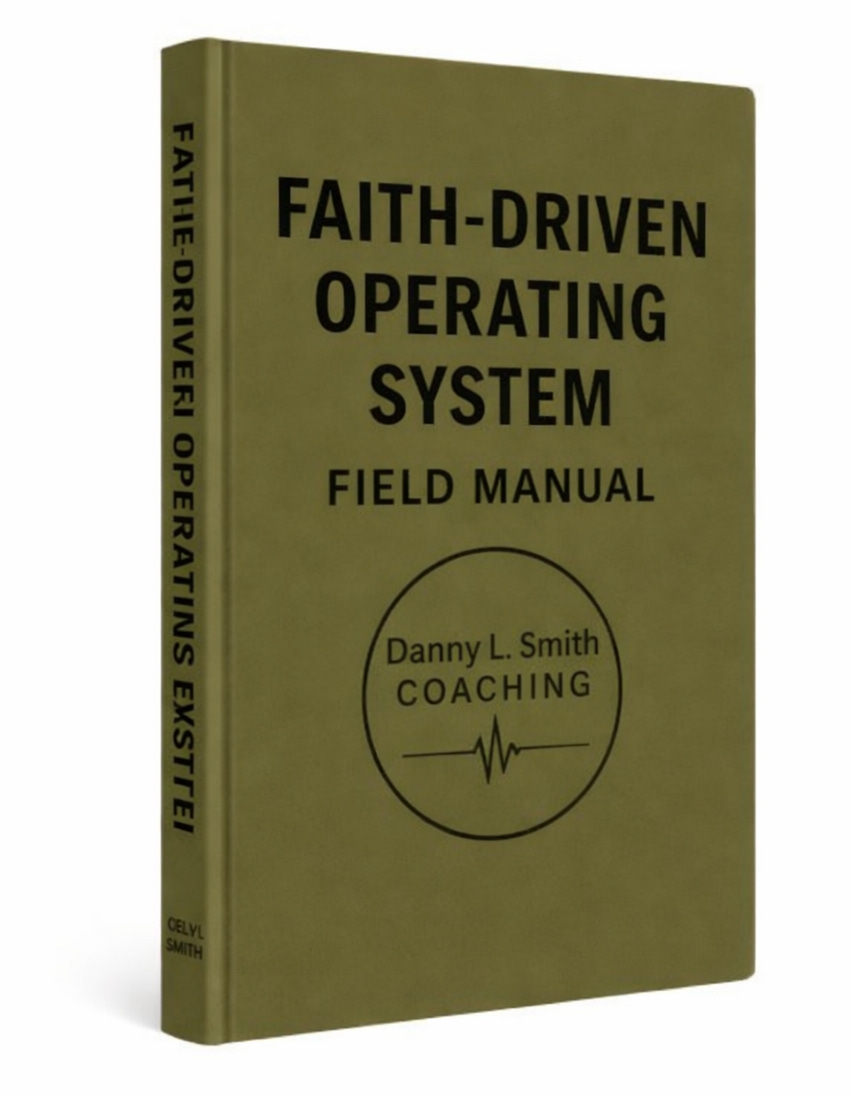
From the Faith-Driven Operating System Field Manual
How 1 Corinthians 12 Aligns with the Working Genius Framework
In 1 Corinthians 12, the Apostle Paul addresses a problem within the church in Corinth. The believers were comparing spiritual gifts, elevating some roles, and minimizing others. This created pride, insecurity, and division. Paul responds by presenting a powerful image: the church is like a human body composed of many parts, each with different functions but one shared purpose.
While Paul’s teaching is theological, it also describes a practical design for how people contribute within a community. Modern leadership frameworks have attempted to capture similar dynamics. One example is the Working Genius framework developed by Patrick Lencioni, which identifies six stages of contribution within any collaborative effort: Wonder, Invention, Discernment, Galvanizing, Enablement, and Tenacity.
When viewed carefully, Paul’s teaching in 1 Corinthians 12 aligns remarkably well with this understanding of how people function together. Both emphasize that diverse contributions are intentional and necessary. Both warn against elevating one type of contribution above others. And both highlight that healthy collaboration depends on recognizing and valuing different forms of work.
Paul’s Vision of the Body
Paul begins by explaining that spiritual gifts come from the same source.
“Now there are varieties of gifts, but the same Spirit; and there are varieties of service, but the same Lord.” (1 Corinthians 12:4–5, ESV)
The emphasis here is unity with diversity. The Spirit distributes different gifts among believers so that the entire body may function properly. Paul goes further and says that every believer receives some manifestation of the Spirit for the common good.
The central metaphor follows:
“For just as the body is one and has many members… so it is with Christ.” (1 Corinthians 12:12)
Just as the human body requires eyes, hands, feet, and ears to function properly, the church requires different roles and contributions. No single member possesses every function. Health emerges not from uniformity but from coordinated diversity.
Paul directly addresses two distortions that often appear in communities. The first is inferiority: some members may believe their contribution is insignificant. The second is superiority: others may assume their contribution makes them independent of the rest of the body. Paul rejects both views. Every part belongs, and every part depends on the others.
The Working Genius Framework
The Working Genius model proposes that productive work generally moves through six stages:
Wonder – noticing opportunities, problems, or possibilities
Invention – generating ideas and solutions
Discernment – evaluating ideas and determining wisdom
Galvanizing – rallying people to action
Enablement – assisting others in moving work forward
Tenacity – completing the work and driving execution
Each stage represents a different kind of contribution. Individuals typically have natural strengths in two of these areas, competency in two others, and frustration in the remaining two.
The framework’s central insight is that teams function best when all six stages are present. If one stage is missing, the work process becomes unbalanced. For example, without Wonder a team may never notice new opportunities, and without Tenacity ideas never become reality.
Alignment Between Paul’s Teaching and Working Genius
Paul’s description of the body reflects a similar understanding of complementary roles.
First, both perspectives recognize that diversity of contribution is intentional. Paul states that “God arranged the members in the body, each one of them, as he chose” (1 Corinthians 12:18). This corresponds to the Working Genius principle that people are naturally wired for different types of work.
Second, both frameworks emphasize interdependence. In the body metaphor, the eye cannot say to the hand, “I have no need of you.” Similarly, the Working Genius model stresses that each stage of work depends on the others. Ideas require evaluation, mobilization, support, and execution.
Third, both warn against elevating certain roles above others. In Corinth, more visible gifts were being treated as more important. In organizations today, visible roles such as leadership or idea generation may be valued more highly than supportive or execution-oriented roles. Paul counters this tendency by noting that the parts of the body that seem weaker are often indispensable (1 Corinthians 12:22).
Finally, both perspectives focus on the good of the whole. Spiritual gifts are given “for the common good” (1 Corinthians 12:7). In the Working Genius framework, each stage contributes to the successful completion of a shared mission.
Paul’s Deeper Foundation
Although these parallels are striking, Paul’s teaching goes deeper than any organizational framework. For Paul, gifts originate in the Holy Spirit and exist for the glory of God and the health of the body of Christ.
Human frameworks describe patterns of contribution, but Paul grounds those patterns in divine design. The distribution of gifts is not random personality variation; it reflects God’s intentional ordering of the community.
Paul also introduces an essential safeguard that transcends leadership models. At the end of chapter 12 he writes, “I will show you a still more excellent way.” Chapter 13 then reveals that the proper use of every gift must be governed by love.
Without love, gifts become tools for personal recognition rather than service. Love ensures that diverse contributions remain oriented toward building up others rather than elevating oneself.
Implications for Leadership and Organizations
When leaders understand both Paul’s teaching and frameworks like Working Genius, several practical implications emerge.
First, leaders must recognize and honor different types of contribution. Healthy teams require people who notice problems, generate ideas, evaluate options, mobilize action, support others, and finish tasks.
Second, leaders should guard against role hierarchy. The quiet work of support and execution is often as essential as visible leadership or innovation.
Third, leaders should design teams intentionally. Just as a body requires many parts, organizations function best when different types of contributors are present and coordinated.
Finally, leaders must cultivate humility and love. Systems and frameworks help clarify roles, but spiritual maturity ensures that those roles are exercised for the good of others.
Conclusion
Paul’s teaching in 1 Corinthians 12 provides a timeless description of how communities function when diverse gifts are coordinated toward a shared purpose. The Working Genius framework offers a contemporary way of recognizing similar patterns in collaborative work.
Both perspectives affirm that healthy teams require multiple forms of contribution and that no single role is sufficient on its own. Yet Paul’s teaching adds a deeper foundation: these differences exist by God’s design and are meant to serve the flourishing of the whole body.
When leaders understand this principle, they can move beyond comparison and competition. Instead, they begin to see work as a coordinated effort in which each person contributes according to the way God has uniquely equipped them.
To that end….
If you’re in the Cedar Park/ Austin, Texas, area, join me Mondays at lunch for CBLG where we discuss having a faith-driven operating system.
We also have Leadership Masterminds, Peer-to-Peer Advisory Boards, and other live and online learning events.
Send me a message for information.
Danny
A Faith-Driven Operating System is a consciously defined framework that governs how a person or business thinks, decides, acts, measures, corrects, and realigns their life under the authority of God. Search my Substack to read about having a Faith-Driven Operating System.